From Hohokam canals to the Fiesta Bowl Parade: the landmarks and traditions that tell Phoenix's story
Ancient canals, a territorial townsite, a copper-domed Capitol and two improbable castles: a walk through Phoenix history, plus the yearly traditions that still bring the city together.
Phoenix carries its origin story in its name. The settlers who arrived in the 1860s found the remains of a much older civilization, and they built their town on top of its work. Much of that layered history is still there to visit, and the city keeps adding traditions of its own.
The first builders
Long before the city, the Ancestral Sonoran Desert people whom archaeologists call the Hohokam farmed the Salt River Valley. By the city's count, the people of the village known as Pueblo Grande built about 135 miles of canals. That village is preserved today as S'edav Va'aki Museum, beside Sky Harbor International Airport, on an archaeological site about 1,500 years old. The museum took its current name in 2023. The O'odham name refers to the site's large platform mound, its central place in the valley and the canal system that surrounded it.
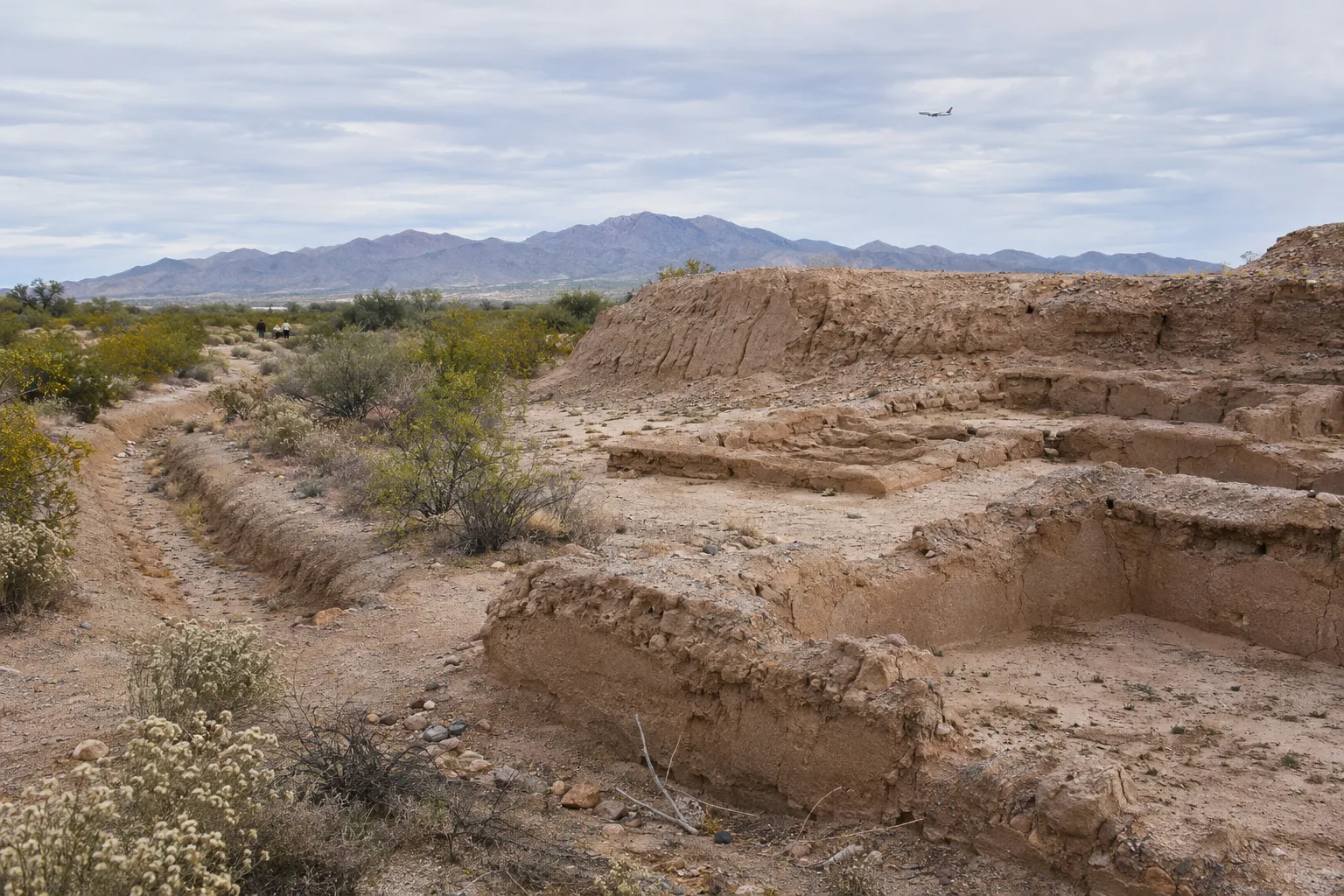
Preservation started early here. In 1924 Thomas Armstrong bought the platform mound and donated it to the city, which added the canal remains known as the Park of Four Waters that same year. In 1929 Phoenix hired Odd Halseth as its first city archaeologist, by the museum's account the first in the nation. The site is now a National Historic Landmark, and every December the museum foundation's Indian Market, first held in 1977, brings more than 100 Native artists to the grounds.
A territorial town takes shape
In 1867 Jack Swilling organized an irrigation canal company, and water flowed through its canal in March 1868. That year Darrell Duppa suggested the name Phoenix, for a town that would rise from the ruins of an earlier civilization. Settlers chose a townsite in October 1870, the first lots sold that December, and the city was incorporated in 1881. In 1889 the territorial government moved to Phoenix from Prescott.
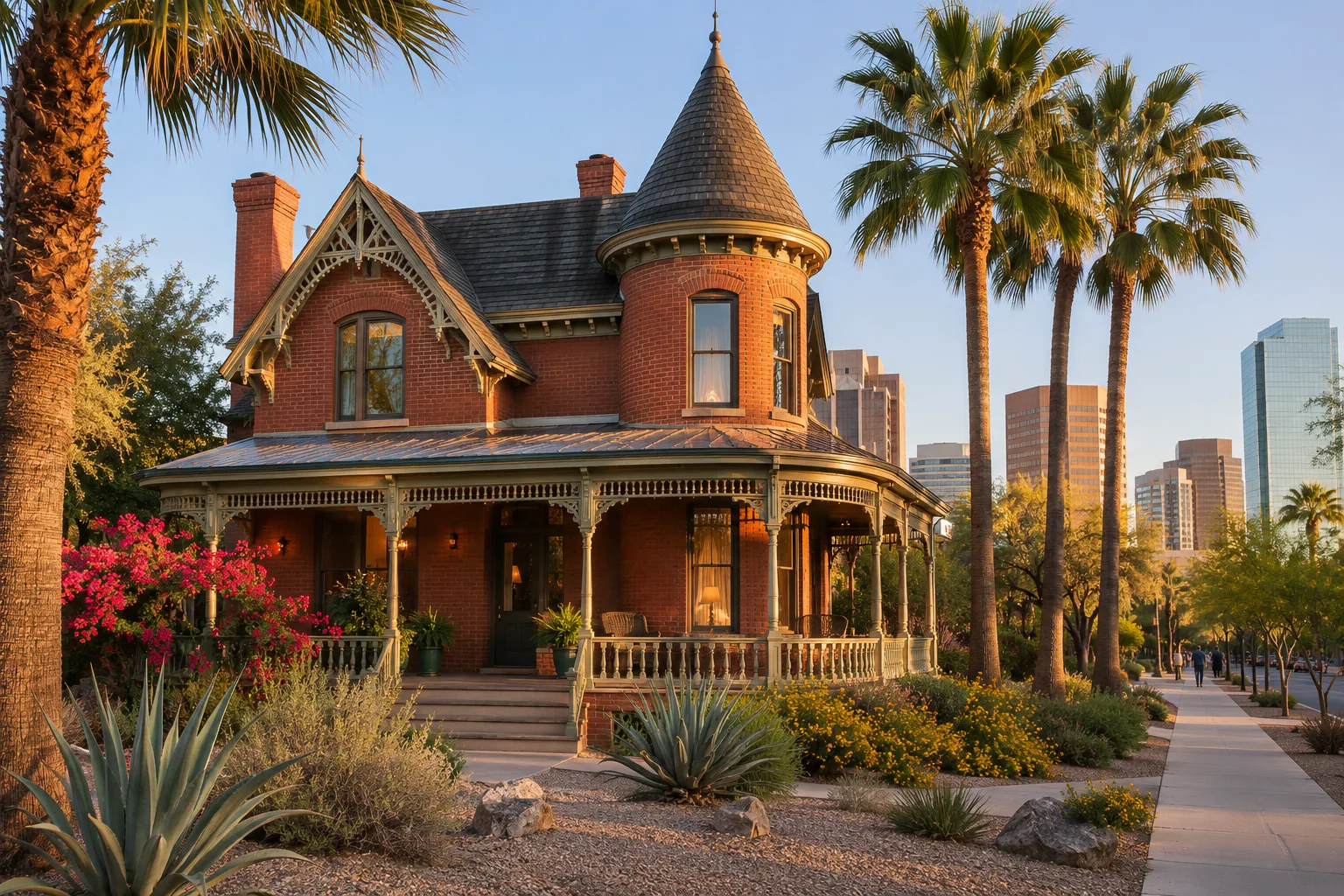
Heritage Square, on Block 14 of the original townsite, offers the clearest picture of that era. Its centerpiece, the Rosson House, was built in 1894 and 1895. The city acquired it in 1974 and opened it as a museum in 1980, and guided tours still lead visitors through its rooms.
Statehood and the Capitol
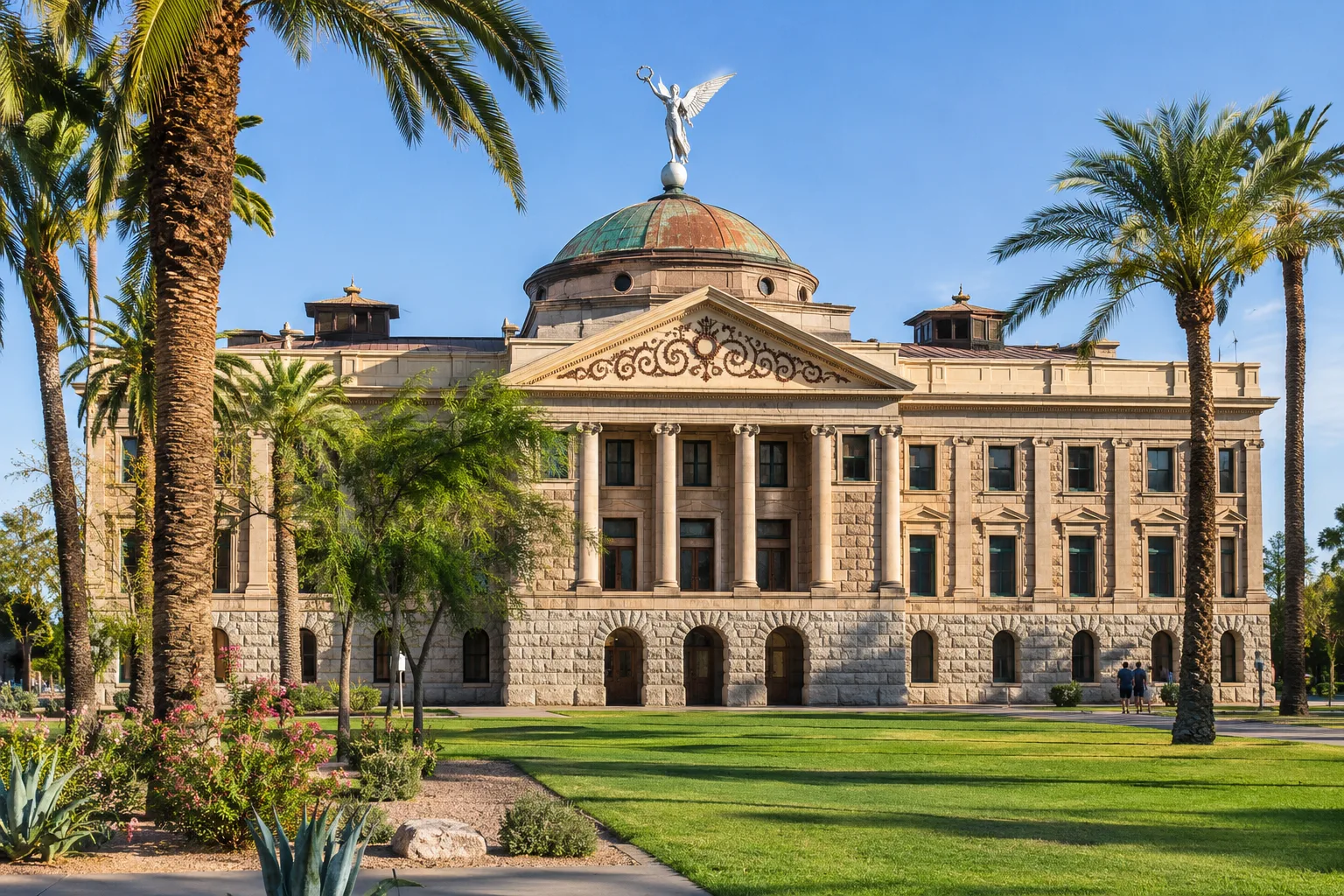
The Arizona Capitol was dedicated in 1901. Roosevelt Dam, dedicated in 1911, secured the valley's water, and on February 14, 1912, Arizona became a state. The Capitol housed the Legislature until 1960 and executive offices until 1974. Restored and rededicated, it opened as the Arizona Capitol Museum in 1979, and its copper dome remains the centerpiece of the state government complex.
Downtown, the Orpheum Theatre opened on January 5, 1929, when Phoenix was a town of about 48,000. Architects Lescher & Mahoney gave it an atmospheric interior of Spanish-style buildings beneath a painted sky. The city bought the theater in 1984, saving it from demolition, and reopened it in January 1997 after restoration.
Two castles on the edges
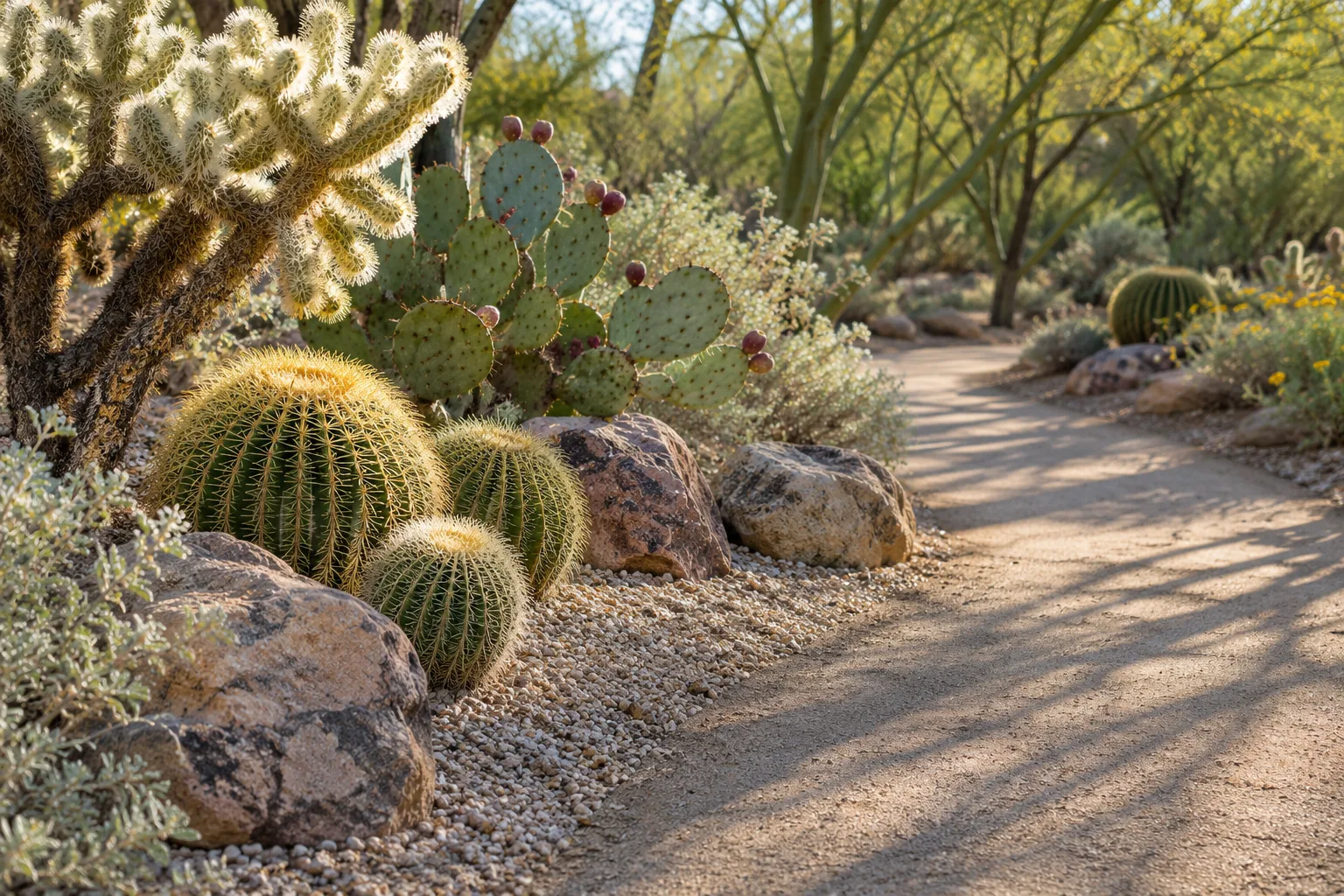
Two very different castles date from the same years. On the east side, Alessio Carraro began building a hotel in 1929 as the centerpiece of a planned resort, and the stock market crash ended those plans. In 1931 E.A. and Della Tovrea bought the hotel, and Della lived there until her death in 1969. Many locals know Tovrea Castle as the wedding cake house for its tiered silhouette. The city bought the castle and its cactus gardens in 1993, restored it and opened it for tours.
In the South Mountain foothills, Boyce Luther Gulley spent his last 15 years, from 1929 until his death in 1945, building the Mystery Castle for his family, chiefly his daughter, Mary Lou, using largely salvaged materials. She began giving tours in 1948 and continued until her death in 2010. A nonprofit foundation maintains it today.
A city that grew up fast
During World War II, Luke, Williams and Falcon fields brought military personnel to the area, the city became an industrial center, and growth followed. By 1950 Phoenix had about 105,000 residents. Today it covers more than 500 square miles, is home to more than 1.6 million people and ranks fifth in population among the nation's cities.
Traditions locals keep
- The Arizona State Fair began in 1884 as a territorial fair and has been held at the fairgrounds at 19th Avenue and McDowell Road since 1905.
- The Cultural Coalition's MIKIZTLI Día de los Muertos festival held its 15th edition downtown in October 2026, with a large community ofrenda, mariachi and ballet folklórico, and a procession led by towering skeleton puppets.
- ZooLights turns the Phoenix Zoo's trails into a holiday light walk, running from late November into mid-January in the 2026–27 season.
- The Fiesta Bowl Parade has marched through central Phoenix for more than 50 years with giant balloons, floats and marching bands. Its 54th edition heads down Central Avenue on January 2, 2027.
Reading the layers
The pleasure of Phoenix history is how close together it sits. In a single day you can stand beside a Hohokam platform mound as jets climb out of Sky Harbor, tour a Victorian house on the original townsite, and catch a show beneath the Orpheum's painted sky. Each stop adds another chapter to the same story.
Sources and further reading 18
- City of Phoenix: phoenix.gov/administration/departments/communications/history-facts/city-history.htmlchecked November 5, 2026 · Pueblo Grande residents built about 135 miles of canals; Swilling Irrigation Canal Company 1867; water flowed March 1868; Duppa suggested the name Phoenix; townsite selected Oct. 20, 1870; lots sold Dec. 1870; incorporation Feb. 25, 1881; territorial offices moved from Prescott 1889; Roosevelt Dam dedicated May 18, 1911; statehood Feb. 14, 1912; 1930 census 48,118; WWII Luke, Williams and Falcon fields and industrial growth; about 105,000 residents in 1950; today 500+ square miles, 1.6…
- City of Phoenix, S'edav Va'aki Museum: phoenix.gov/administration/departments/sedav-vaaki/about-us.htmlchecked November 5, 2026 · 1,500-year-old archaeological site inhabited by the Ancestral Sonoran Desert people archaeologists call the Hohokam; next to Sky Harbor; National Historic Landmark; part of the City of Phoenix since 1929.
- KJZZ: kjzz.org/content/1842326/phoenix-pueblo-grande-museum-renamed-sedav-vaaki-museumPublished March 24, 2023 · checked November 5, 2026 · Pueblo Grande Museum renamed S'edav Va'aki Museum; the O'odham name refers to the platform mound, the village's central location in the Salt River Valley and the Hohokam canal system.
- City of Phoenix, Pueblo Grande Museum (now S'edav Va'aki Museum): web-prod.phoenix.gov/content/dam/phoenix/sedavvaaki/documents/education/BriefHistorySVM.pdfPublished June 21, 2012 · checked November 5, 2026 · Thomas Armstrong bought and donated the platform mound in 1924; city bought the Park of Four Waters canal remains the same year; Odd Halseth hired in 1929 as first city archaeologist in the nation; first annual Indian Market held 1977. publishedOn is the PDF's creation date.
- City of Phoenix, S'edav Va'aki Museum: phoenix.gov/administration/departments/sedav-vaaki/programs-and-events/svm-annual-events.htmlchecked November 5, 2026 · S'edav Va'aki Museum Foundation Indian Market on the second weekend of December each year, with over 100 Native American artists.
- The Square PHX (Heritage Square): thesquarephx.orgchecked November 5, 2026 · Heritage & Science Park buildings sit on Block 14 of the townsite of Phoenix; Rosson House Museum guided tours.
- The Square PHX (Heritage Square): thesquarephx.org/about/rosson-house-timeline/checked November 5, 2026 · Rosson House built 1894-95; title transferred to the City of Phoenix in 1974; opened as a museum in 1980.
- Arizona Capitol Museum (Arizona Legislative Council): azcapitolmuseum.gov/about/Published November 12, 2025 · checked November 5, 2026 · Historic Capitol dedicated in 1901; housed the Legislature until 1960 and executive offices until 1974; restored and rededicated, opened as the Arizona Capitol Museum in 1979; iconic copper dome is the centerpiece of the state government complex.
- Friends of the Orpheum Theatre: fototphx.org/theatre-historychecked November 5, 2026 · Orpheum opened January 5, 1929, when Phoenix had about 48,000 residents; architects Lescher & Mahoney; atmospheric style with Spanish-style buildings and painted sky; city bought it in fall 1984, saving it from demolition; renovation began April 1995; reopened January 28, 1997.
- Visit Phoenix (Teresa Bitler): visitphoenix.com/stories/post/touring-tovrea-castle/Published September 27, 2021 · checked November 5, 2026 · Carraro began building a hotel in 1929 for a resort and the Carraro Heights subdivision; the 1929 crash hurt the plan; Della Tovrea bought it and lived there until 1969; known locally as 'the wedding cake house'; the city purchased, renovated and opened it for tours.
- Tovrea Castle Tours (Tovrea Carraro Society): tovreacastletours.com/the-characters-of-the-castle/checked November 5, 2026 · E.A. and Della Tovrea bought the castle in 1931; the City of Phoenix bought the castle and Cactus Gardens from the Tovrea family estate in 1993.
- Phoenix New Times (Niki D'Andrea): phoenixnewtimes.com/arts-culture/the-mystery-castle-6581942/Published February 18, 2011 · checked November 5, 2026 · Construction began in 1929; Boyce Luther Gulley spent 15 years building it for his wife and daughter Mary Lou until his death in 1945; primarily recycled materials; Mary Lou began giving tours in 1948; near South Mountain.
- Arizona's Family (azfamily.com): azfamily.com/2022/03/06/phoenix-police-looking-vandals-who-destoyed-historic-mystery-castle/Published March 6, 2022 · checked November 5, 2026 · Used only for history: the Mystery Castle Foundation, a registered nonprofit, has maintained the site since Mary Lou Gulley's death in 2010.
- KTAR News: ktar.com/arizona-news/arizona-state-fair-announces-2024-dates-birthday-theme-for-140th-anniversaryPublished February 14, 2024 · checked November 5, 2026 · State fair began in 1884 as the territorial fair, nearly 30 years before statehood; held at 19th Avenue and McDowell Road since 1905.
- Cultural Coalition: culturalcoalition.com/events/mikiztli-dia-de-los-muertos-festival/checked November 5, 2026 · 15th Annual MIKIZTLI: Día de los Muertos PHX Festival, October 24, 2026, at the Arizona Center downtown; community ofrenda; procession led by 8-foot skeleton puppets; mariachi and ballet folklórico.
- Phoenix Zoo: phoenixzoo.org/events/zoolights/checked November 5, 2026 · ZooLights holiday light display along zoo trails, November 25, 2026 to January 15, 2027.
- Fiesta Sports Foundation: fiestasportsfoundation.org/paradechecked November 5, 2026 · 54th annual Fiesta Bowl Parade on Saturday, January 2, 2027, through Central Phoenix starting at Central Ave & Montebello Ave; more than 50 years of tradition; balloons, floats, marching bands.
- Arizona's Family (azfamily.com): azfamily.com/2026/10/07/phoenix-childrens-hospital-named-title-sponsor-fiesta-bowl-parade/Published October 7, 2026 · checked November 5, 2026 · Parade on Jan. 2, 2027, 1.5 miles down Central Avenue.