Ten Things Worth Knowing About Phoenix, From Its Name to Its Thermometer
Ancient canals, clocks that never change, an airport once nicknamed The Farm and a mountain park bigger than many towns: ten facts about Phoenix, each checked against the record.
Every city has its trivia. Phoenix's happens to include ancient engineers, an airport once called "The Farm" and a mountain park big enough to spend a whole day in. Here are ten things worth knowing, each checked against the people who keep the records.
1. The name was a prediction
When settlers organized a town beside the Salt River in the late 1860s, names like Stonewall and Salina were suggested and set aside. According to the city's official history, Darrell Duppa proposed Phoenix, reasoning that the new town would rise from the remains of an earlier civilization, much as the mythical bird rises from its ashes. The name became official on May 4, 1868, when Yavapai County formed an election precinct there.
2. The first canal builders came a thousand years earlier
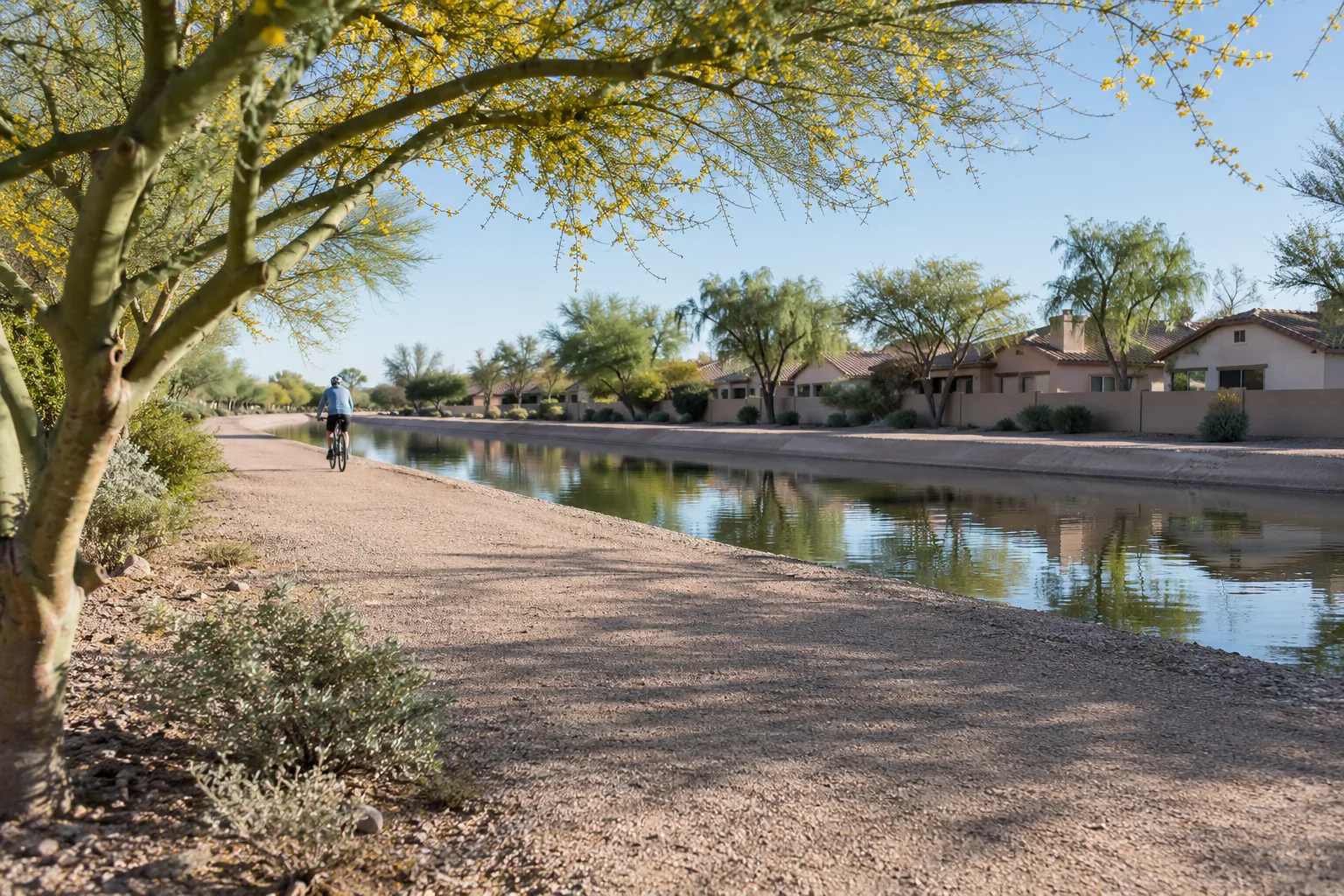
The earlier civilization Duppa had in mind was the Hohokam, whose village at today's S'edav Va'aki Museum was occupied from roughly 700 to 1400 A.D. The city describes their irrigation network as one of the largest and most sophisticated in the Americas before Europeans arrived. In the 1860s newcomers set about reviving those old channels. Today Salt River Project counts more than 131 miles of canals across the Phoenix area, with about 80 miles of paths beside them for walking and biking.
3. The museum on that site has an O'odham name
For decades the city-owned museum near 44th and Washington streets was called Pueblo Grande. In March 2023 the Phoenix Parks and Recreation Board renamed it S'edav Va'aki, an O'odham name that points to the large platform mound preserved there, the village's central place in the valley and its canal system. The site is a National Historic Landmark.
4. Nobody here changes the clocks
Arizona observed daylight saving time from April to October 1967, then stopped, and most of the state has kept standard time ever since. ASU historian Calvin Schermerhorn has explained that longer evening sun simply meant longer hours of air conditioning. The exception is the Navajo Nation, which observes daylight saving time to stay in step with its lands in Utah and New Mexico. The Hopi reservation, which the Navajo Nation surrounds, does not.
5. The official thermometer lives at the airport
Phoenix's official climate record is kept at Phoenix Sky Harbor International Airport, and it holds some remarkable numbers. The all-time high is 122 degrees, set on June 26, 1990. In 2023 the city spent 31 consecutive days at 110 or above, from June 30 to July 30, and on July 19 of that summer the temperature never fell below 97 degrees, the warmest low on record there. The next year brought 70 days of 110 or hotter, the most in any year.
6. Sky Harbor started out as "The Farm"
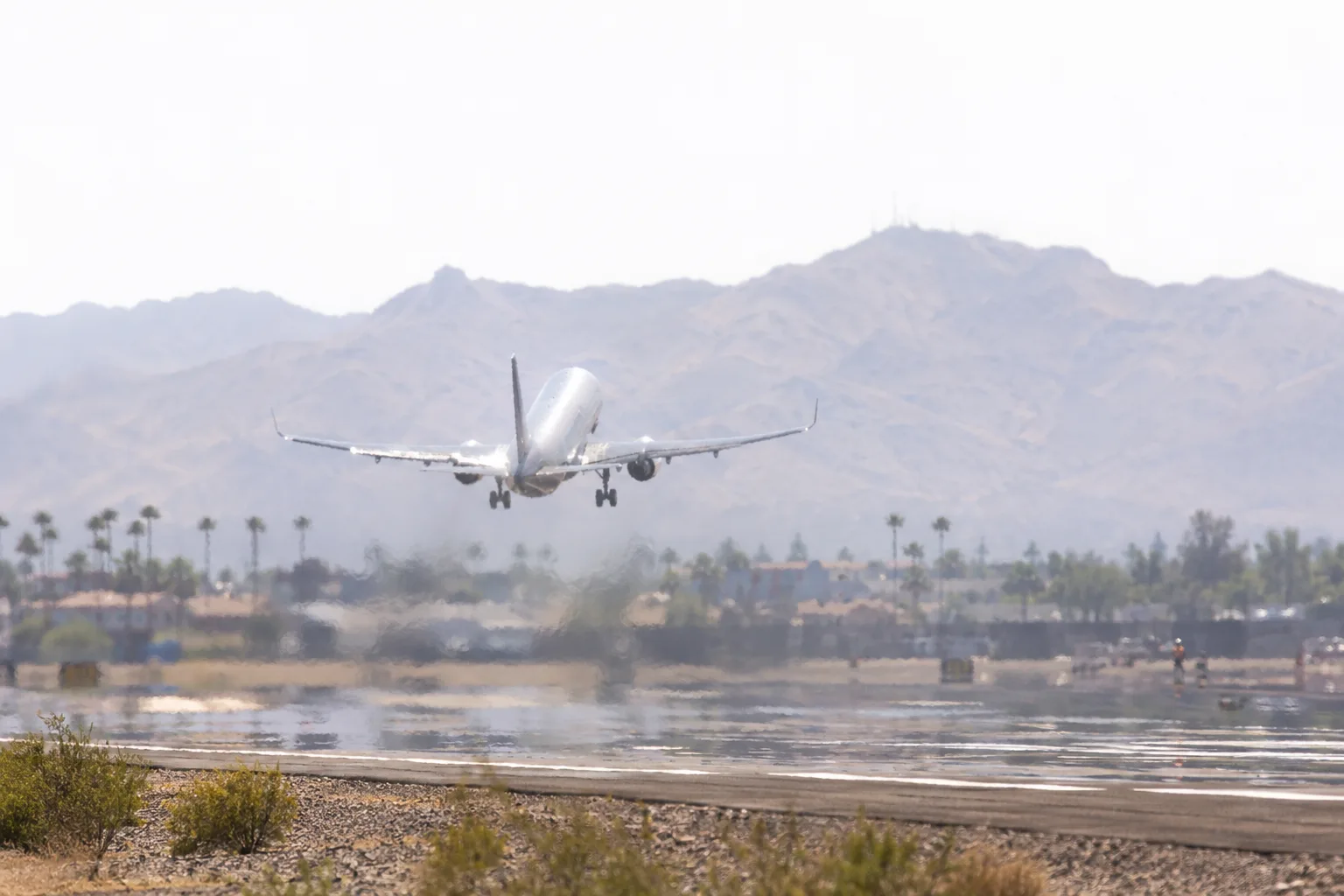
When the City of Phoenix bought the airport in 1935, it sat so far from central Phoenix that people called it "The Farm," according to the airport's own history. It has grown a bit since. The airport reported more than 51.6 million passengers in 2025, and on March 8, 2026, its busiest day yet, checkpoints screened 86,250 travelers.
7. It grew from 17 square miles to more than 500
In 1950 Phoenix covered 17.1 square miles and ranked 99th among American cities, according to the city's history. Today it spans more than 500 square miles and ranks fifth in the nation, with roughly 1.7 million residents by the city's planning department's count.
8. South Mountain is a park you can spend a day in
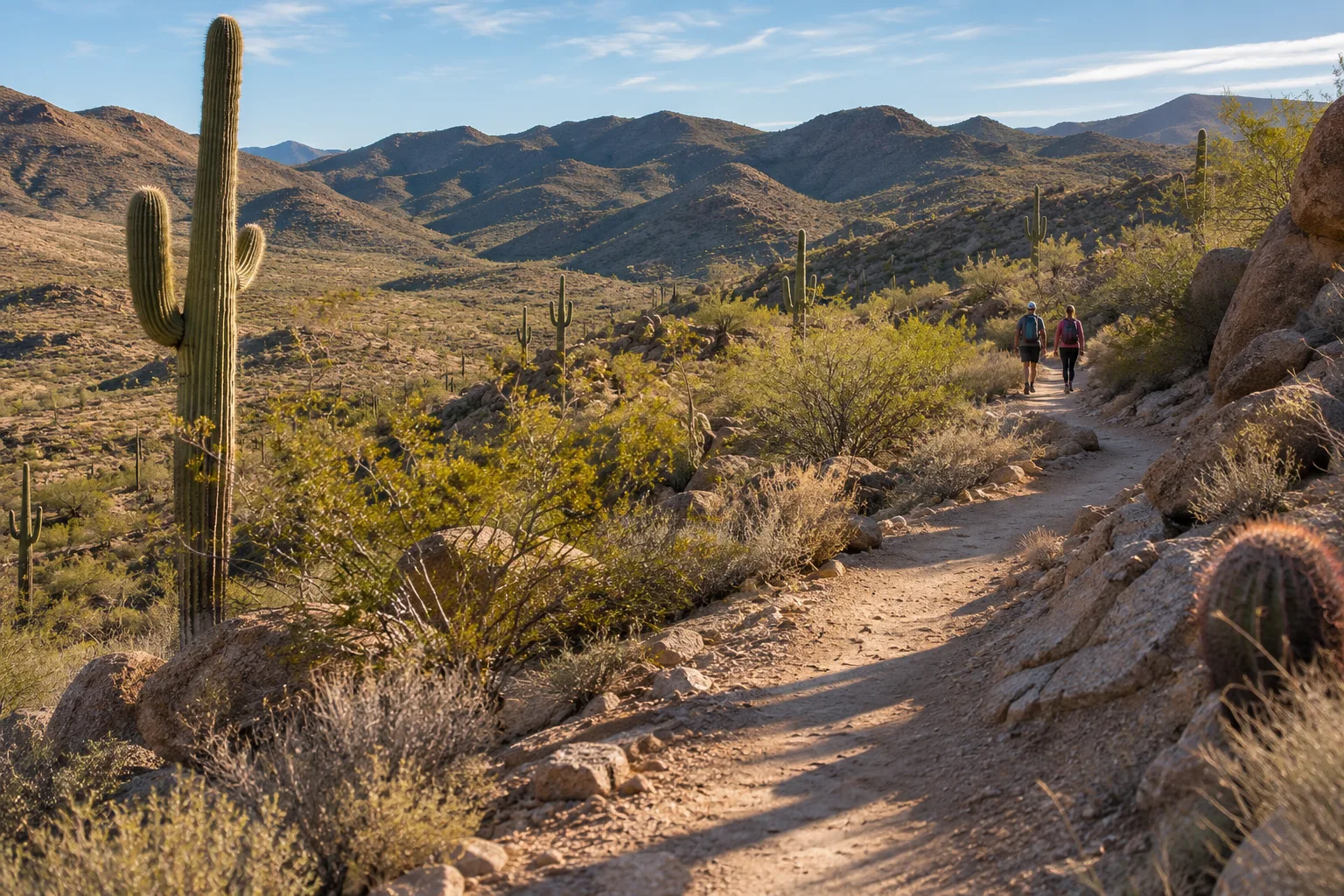
South Mountain Park/Preserve covers more than 16,000 acres across three ranges, the Ma Ha Tauk, the Gila and the Guadalupe, and the city calls it one of the largest municipally managed parks in the nation. Phoenix bought its first 13,000 acres in 1924. More than 100 miles of trails cross it, and Dobbins Lookout, at 2,330 feet, is the highest point open to the public.
9. Papago Park packs a lot of history into its red buttes
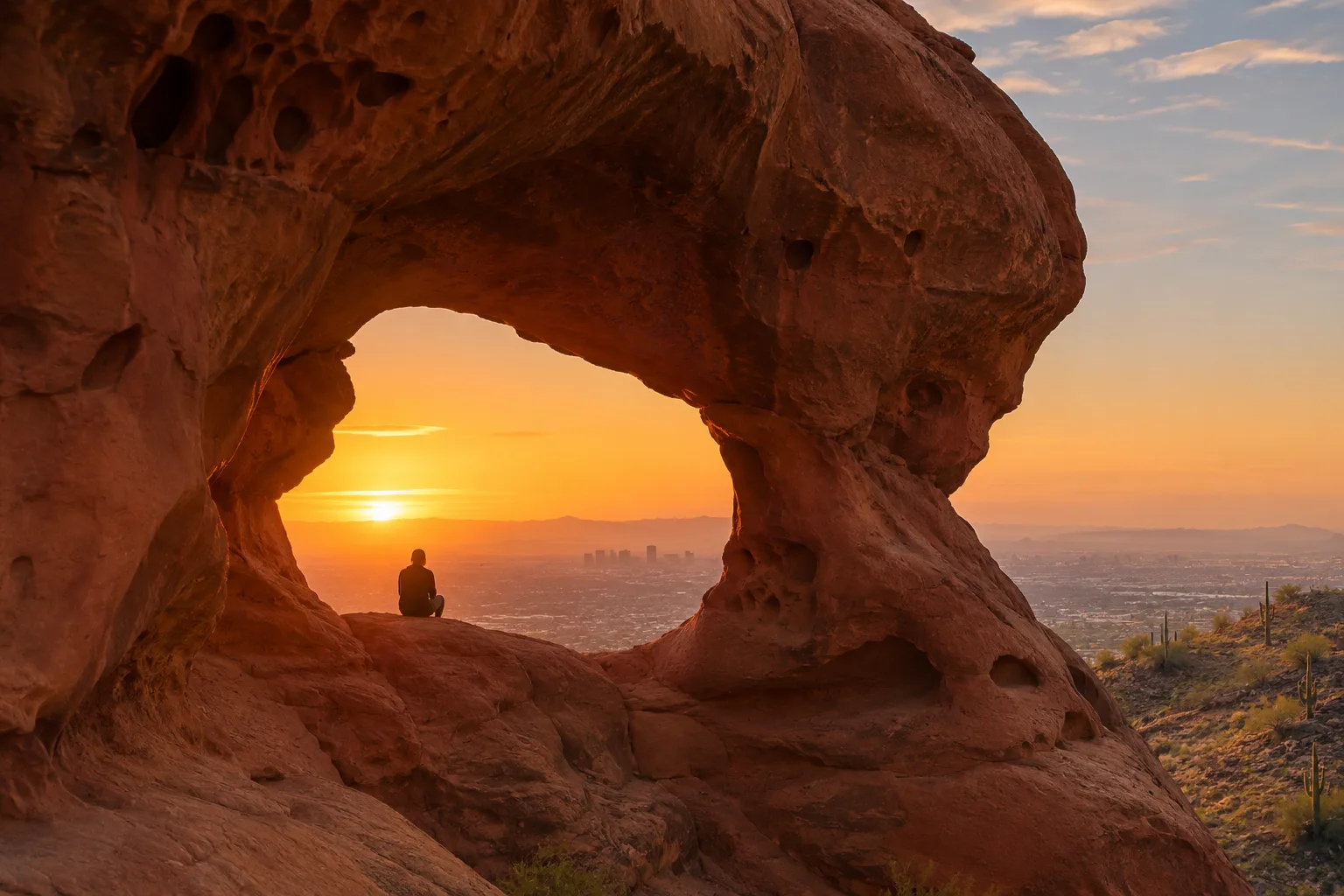
In Papago Park, a short trail climbs to Hole-in-the-Rock, an opening the Hohokam are thought to have used to follow the sun. On a nearby hill stands a small white pyramid: the tomb Arizona's first governor, George W. P. Hunt, built in 1931 for his wife, and where he was laid to rest after his death in 1934. Over the years the park's land has also served as a reservation, a Depression-era fish hatchery and a World War II prisoner-of-war camp, according to Visit Phoenix.
10. Art runs deep here, too
The Heard Museum opened to the public on December 26, 1929, built around the collection of Dwight and Maie Heard, and Maie guided it through its first 22 years. Today it is devoted to the work of American Indian artists, and each March its guild's Indian Fair and Market brings more than 600 Native artists together. Downtown, the First Friday art walk has its own origin story: the nonprofit Artlink started it in the mid-1990s with a handful of participants, and now thousands of people fill the Roosevelt Row and Historic Grand Avenue arts districts on the first Friday of every month.
The short version
Phoenix is a young city standing on very old ground, with mountains and museums close enough for an ordinary afternoon. Ten facts are only a start; the best ones you will find yourself.
Sources and further reading 17
- City of Phoenix: phoenix.gov/administration/departments/communications/history-facts/city-history.htmlchecked November 5, 2026 · Duppa suggested the name; Stonewall and Salina rejected; recognized May 4, 1868 as a Yavapai County precinct; Hohokam occupation c. 700-1400 A.D.; 17.1 sq mi and 99th in 1950; more than 500 sq mi and fifth today; more than 1.6 million residents.
- City of Phoenix: phoenix.gov/administration/departments/sedav-vaaki.htmlchecked November 5, 2026 · S'edav Va'aki Museum is a National Historic Landmark; the canal system was among the largest and most sophisticated in the New World before Europeans arrived.
- Salt River Project: blog.srpnet.comPublished October 13, 2022 · checked November 5, 2026 · Settlers revived the ancient canals in the 1860s; over 131 miles of canals in the Phoenix area; 80 miles of recreational canal paths.
- KJZZ: kjzz.org/2023-03-24/content-1842326-phoenix-pueblo-grande-museum-renamed-sedav-vaaki-museumPublished March 24, 2023 · checked November 5, 2026 · Phoenix Parks and Recreation Board renamed Pueblo Grande Museum to S'edav Va'aki in March 2023; O'odham name referring to the platform mound, the village's central location and the canals; museum near 44th and Washington streets.
- ASU News: news.asu.edu/20180305-discoveries-why-arizona-has-opted-out-daylight-saving-timePublished March 8, 2018 · checked November 5, 2026 · Arizona observed DST April-October 1967 then stopped; air-conditioning and energy use; Navajo Nation observes DST, Hopi does not.
- National Weather Service Phoenix: weather.gov/psr/ExtremeTempschecked November 5, 2026 · All-time high 122F on June 26, 1990; longest 110F+ streak 31 days, June 30-July 30, 2023; most 110F days in a year 70 (2024); coldest 16F on January 7, 1913.
- National Weather Service Phoenix: weather.gov/media/psr/Climate/July2023Climate.pdfchecked November 5, 2026 · 1991-2020 normal July average high 106.5F; 97F low on July 19, 2023 is the all-time warmest low at Sky Harbor; official climate data recorded at Sky Harbor.
- Phoenix Sky Harbor International Airport: skyharbor.com/about-phx/news-media/phx-check-in/2025/march-2025/90-years-at-phx-1930s/checked November 5, 2026 · City bought the airport in 1935; nicknamed The Farm because it was far from central Phoenix. Page is dated March 2025 (month only).
- City of Phoenix Aviation Department: phoenix.gov/newsroom/aviation-news/phoenix-sky-harbor-sets-passenger-records.htmlPublished April 30, 2026 · checked November 5, 2026 · More than 51.6 million passengers in 2025; busiest day March 8, 2026 with 86,250 passengers screened.
- City of Phoenix Planning and Development: phoenix.gov/administration/departments/pdd/growth-infrastructure/city-wide-census-data.htmlchecked November 5, 2026 · About 1.7 million residents as of July 2024; fifth-largest US city.
- City of Phoenix Parks and Recreation: phoenix.gov/parks/trails/locations/south-mountainchecked November 5, 2026 · More than 16,000 acres; one of the largest municipally managed parks in the nation; Ma Ha Tauk, Gila and Guadalupe ranges; 13,000 acres bought in 1924; centennial in 2024; more than 100 miles of trails; Dobbins Lookout 2,330 feet.
- Visit Phoenix: visitphoenix.com/sonoran-desert/parks/papago-park/checked November 5, 2026 · Red buttes; Hole-in-the-Rock 0.3-mile trail and its thought-to-be Hohokam use for tracking the sun; Hunt's Tomb built 1931 for the wife of Governor George W.P. Hunt, buried there after his death in 1934; past uses as reservation, Depression-era fish hatchery, WWII POW camp.
- Heard Museum: heard.org/maie-bartlett-heard/checked November 5, 2026 · Founded by Dwight and Maie Bartlett Heard; opened to the public December 26, 1929; Maie guided the museum for its first 22 years.
- Heard Museum: heard.org/about/checked November 5, 2026 · Founded 1929; mission centered on presenting the voice and vision of American Indian artists.
- Heard Museum: heard.org/fair/checked November 5, 2026 · Heard Museum Guild Indian Fair + Market each March (69th edition March 6-7, 2027); more than 600 juried Native artists.
- Visit Phoenix: visitphoenix.com/things-to-do/arts-culture/first-friday-art-walkchecked November 5, 2026 · First Friday: first Friday of each month in Roosevelt Row and Historic Grand Avenue arts districts; free, all-ages; founded by Artlink, a nonprofit launched in the mid-1990s, with a handful of participants; now thousands of attendees. (Hours and fares on the page are left out of the body.)
- Artlink Phoenix: artlinkphx.orgchecked November 5, 2026 · Artlink presents First Fridays and the annual Art Detour.